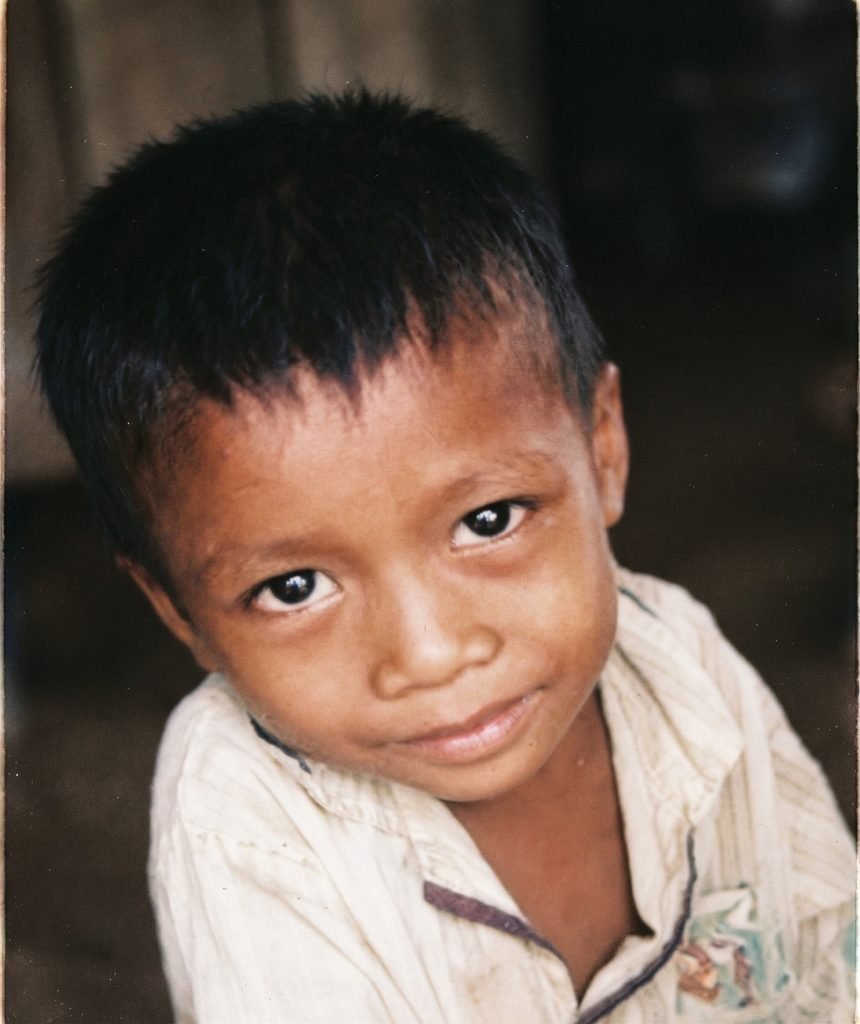
If you could spare me a few moments, I would like to tell you about a young boy who left a lasting mark on my life.
The events took place many years ago, when HIV and AIDS were still widely misunderstood in Cambodia. Effective treatment was not yet available, and fear often overshadowed compassion. Many people believed the disease could be spread through casual contact, and those who became ill were frequently isolated from their families and communities. It was not uncommon for AIDS patients to spend their final days on a cot beneath the family home, near the livestock, separated from those they loved.
At that time there were only a handful of places willing to care for people living with AIDS. Wat Opot was one of them.
One morning we received a call from a hospital in Takeo operated by Doctors Without Borders. A family had taken in a young relative after both of his parents had died of AIDS. When the child was tested, he too was found to be HIV positive. Believing he would soon die, the family brought him home; however, because they had children of their own, they were afraid to let him live among them.
Instead, they built a small wooden box beneath their house and confined him there. He was not allowed to play with the other children. They brought him food and water, but his caretakers avoided touching him whenever possible. For months, he lived as a spectator, watching others laugh, play, and grow while he remained trapped in his tiny world. The lack of exercise left him weak and frail, yet somehow he survived.
Eventually, the family grew tired of caring for him and took him back to the hospital. The doctors placed him in a small, windowless exam room while they assessed his condition, and while they did so, the family left without saying goodbye.
As soon as I got the call, I drove thirty kilometers to the hospital. A nurse led me down a dim corridor and pointed to a bed where a small boy lay quietly. His name was Kosal. He offered no resistance as I lifted his weightless body into my arms. As I carried him to the car, he clung to me with surprising strength, unsure of who I was or what I would do with him. He slept most of the journey back to Wat Opot.
The following morning, he woke to a world entirely different from the one he had known. Children greeted him with smiles. They helped him dress in clean clothes. Most importantly, they touched him without fear.
In the beginning, he could barely walk; by the third day, though, he was moving about on his own, and by the third week, I was telling him to slow down because I was afraid he might hurt himself.
For the first time in his life, Kosal was being treated like an ordinary child. He loved every minute of it. And those of us who watched him blossom loved seeing it happen. Day by day, he grew stronger, not only physically, but emotionally and socially as well.
In 2004, antiretroviral medicines finally became available in Cambodia. For many of our patients, it was the beginning of hope. The number of deaths declined, and for the first time, people living with HIV could begin to imagine an almost normal future. Some of our younger children, however, were already in the advanced stages of AIDS.
One of them was a boy named Chhang, a close friend of Kosal. In January 2005, Chhang became seriously ill and died only hours later. I was holding his hand when it happened.
As he took his final breath, he called out my name. In that same instant, I witnessed something I have never been able to explain. A brilliant light seemed to emerge from his eyes and pass directly through me. That experience changed me.
We cremated the body of Chhang that afternoon according to local custom. Everyone attended the service except Kosal, who for some unknown reason refused to go. That was unusual for him, but I was grieving too deeply to press the matter, so I allowed him to remain at the dormitory.
The following morning, Kosal developed severe diarrhea. I called the doctor, who recommended bringing him in for an evaluation. We were short-staffed, so I asked our cook to take him to the hospital by motorcycle after breakfast. I expected a routine visit, but the doctor decided to admit him overnight for IV therapy. I asked the cook to return to prepare lunch and sent another staff member to relieve her. When the replacement arrived at the hospital that afternoon, she found Kosal dead in the same small, windowless exam room where I had picked him up.
No clear explanation was ever given. There was no one in the room when he died. Nursing care was limited, and patients were commonly left unattended for long periods. I was stunned when the doctor called and asked me to collect the body.
By the time we returned to Wat Opot, it was late afternoon, and I decided to postpone the cremation until morning. I placed Kosal in the casket room of the crematorium and lit incense and a candle beside him. As I looked at his small, lifeless body, my thoughts returned to Chhang and the extraordinary light I had seen at the moment of his death.
Many Buddhists believe the spirit may linger near the body for a time after death. For that reason, they place fruit, rice, and other offerings nearby. They keep candles and incense burning so the spirit will not feel abandoned.
Before Chhang’s death, I had found such beliefs hard to understand. But after what I witnessed, I was no longer so sure. Kosal had not seemed seriously ill. Perhaps he had an undiagnosed heart condition, or reacted to the medicines, or… had he woken in that same dimly lit room where he had first been abandoned? Had he called for someone and heard no answer? In his final moments, had he felt that he had been left behind once again?
I suppose I’ll never know, but the possibility haunted me. The thought that he might somehow still be nearby brought tears to my eyes. I knew I could not leave him alone that night, and so I covered him gently with a blanket, spread my bedding on the floor beside him, and remained there until dawn.
And when the time came for his cremation the following morning, he did not have to face it alone.
Kosal’s life was brief, and much of it was marked by fear, loneliness, and rejection. Yet in the short time he spent at Wat Opot, he discovered something every child deserves: acceptance, friendship, and love. Though I could not change the suffering he endured before we met, I was able to ensure that neither his life nor his death was defined by abandonment. More than twenty years later, I still remember the boy who lived in a box, and I remain grateful that, for a little while, he was free.


